
The $98 Million Mistake: How Your “Trusted” Vendor Just Became Your Worst Enemy
The call came at 3:47 AM. The CISO’s phone buzzed: “We’ve been breached. It’s not us—it’s our payment processor.” Within hours, a vendor’s security lapse became a full-blown crisis — a classic case of third-party risk in financial services. Customer data was compromised. Regulators demanded answers. The institution’s reputation was in freefall. The price tag? $98 million.
The Hidden Vulnerability: Third-Party Risk in Financial Services
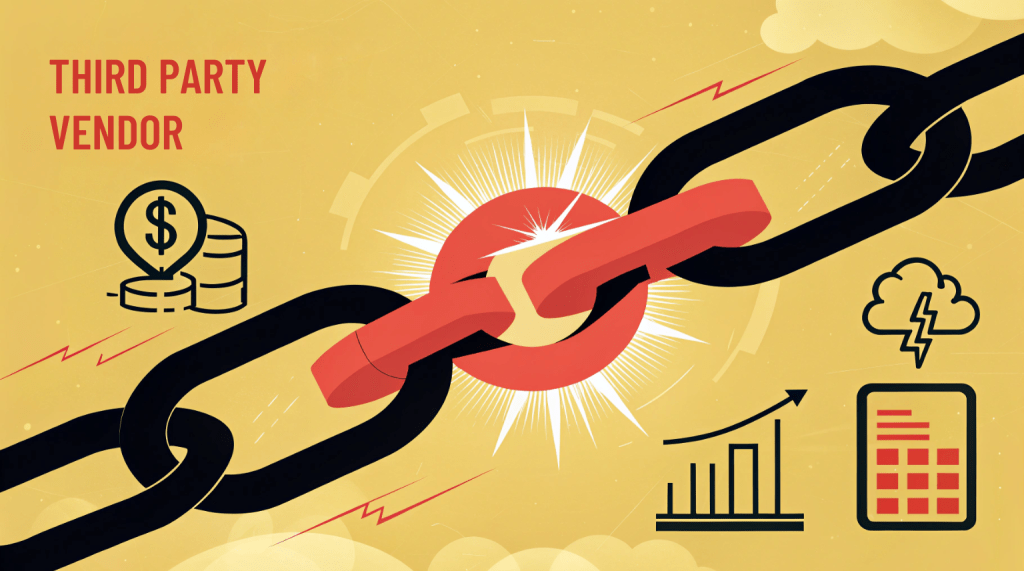
In today’s hyper-connected financial world, your organization’s security is only as strong as its weakest partner. Financial institutions rely on a multitude of third-party vendors for everything from cloud hosting and payment processing to compliance tools and customer-facing applications. Every one of these partnerships introduces risk and expands the threat landscape.
Case in Point: Latitude Financial (2023)
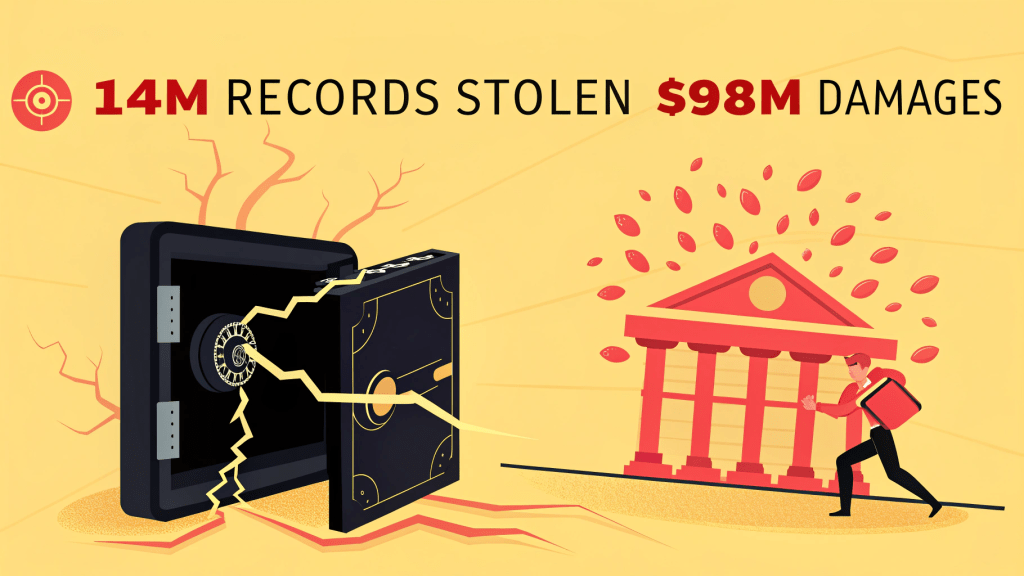
Latitude suffered a catastrophic third-party breach in 2023. The Loss/Effect? 14 million records stolen and $98 million in damages [1]. The institution’s own systems were secure but that didn’t matter. This incident is a textbook example of third-party vendor cybersecurity risks in finance.
Similarly, Evolve Bank & Trust’s 2024 ransomware incident spread to fintech partners Affirm and Wise, impacting 7.6 million individuals [1]. These breaches weren’t the result of internal failure, but of vulnerabilities within their extended digital ecosystem. This highlights the urgency of managing third-party cyber risk proactively.
The Expanding Attack Surface

The more vendors you rely on, the more doors you leave open to potential attackers. Key vulnerabilities include:
- Supply Chain Complexity: Subcontractors within your vendor’s network can introduce cascading vulnerabilities. These are often the source of supply chain attacks in financial services.
- Data Flow Transparency: Lack of visibility into where and how your data is handled increases exposure.
- Inconsistent Security Standards: Smaller vendors often lack the resources to implement strong security controls.
- Regulatory Blind Spots: Third-party security gaps can lead to compliance violations and nonconformance with cybersecurity for financial regulatory compliance.
The Anatomy of a Third-Party Attack
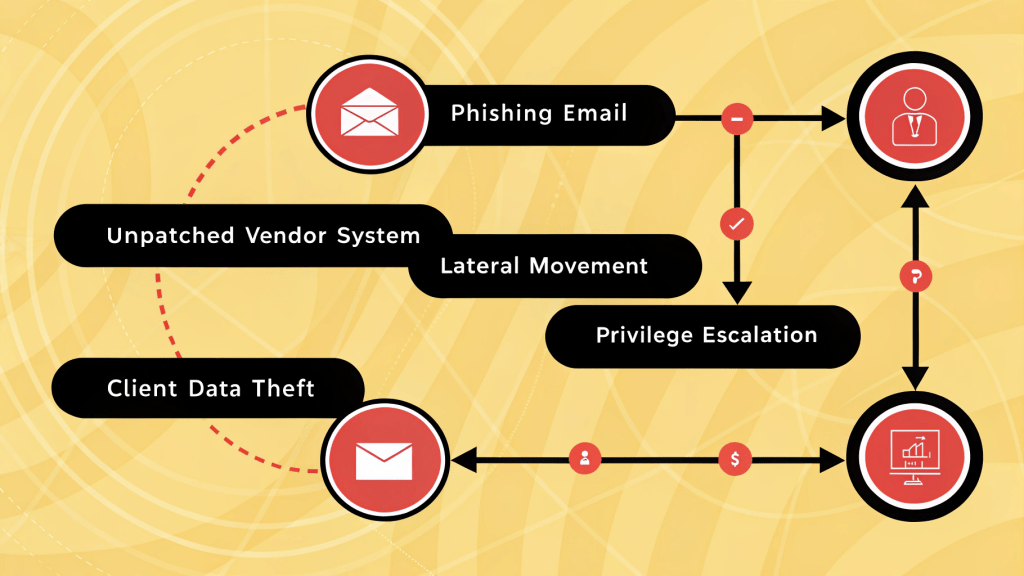
It often begins with a phishing email or an unpatched vulnerability at a small vendor. Attackers move laterally, escalate privileges, and gain access to client systems. They extract data, embed persistence, and prepare for expansion.
This sequence of events is no longer uncommon it’s standard operating procedure for cybercriminals. These types of attacks are increasingly targeting financial sector supply chains.
The True Cost of Third-Party Risk in Financial Services

Beyond direct financial damages, institutions suffer long-lasting repercussions:
- Regulatory Penalties due to compliance failures.
- Class-Action Lawsuits from impacted customers.
- Operational Downtime that halts transactions and services.
- Reputational Damage that erodes public trust.
- Market Share Losses as competitors move in while you recover.
These costs make clear the necessity of robust third-party risk management finance programs.
Building a Resilient Third-Party Risk Management Program
No single solution will prevent every breach, but a strong risk management framework drastically reduces your exposure. Best practices include:
- Continuous Monitoring with automated tools for vendor risk assessment in financial institutions.
- Zero Trust Architecture to ensure vendors have only the access they need.
- Contractual Security Clauses covering breach notifications, audits, and security requirements.
- Integrated Incident Response that includes vendor breach simulations and protocols.
- Proactive Assessments such as regular penetration tests and third-party evaluations.
These controls are vital to meet expectations for cybersecurity consulting in the financial industry.
ActiveLobby: Your Partner in Third-Party Risk Management
We deliver full-spectrum vendor security solutions tailored for financial institutions:
- Thorough Vendor Security Assessments
- Continuous Monitoring Platforms for real-time visibility
- Seamless Incident Response Coordination
- Expert Regulatory Compliance Support
- Deep Supply Chain Visibility
Whether you’re a small credit union or a global investment firm, managing third-party risk in financial services is critical to ensuring your weakest link doesn’t become your biggest threat.
Don’t Let Your Vendor’s Problem Become Your Crisis.